Introduction and classification of pressure vessels
A pressure vessel is a sealed container that carries internal or external gas or liquid pressure and therefore has high safety requirements. Most are cylindrical, a few spherical or of other shapes. A cylindrical vessel is normally made up of the shell, heads, nozzles and flanges; the higher the working pressure, the thicker the shell.
Classification
1. By pressure. Vessels are divided into internal-pressure and external-pressure types. Internal-pressure vessels fall into four design pressure levels:
Low pressure (L): 0.1 MPa ≤ P < 1.6 MPa
Medium pressure (M): 1.6 MPa ≤ P < 10.0 MPa
High pressure (H): 10 MPa ≤ P < 100 MPa
Ultra-high pressure (U): P ≥ 100 MPa
2. By process function.
Reaction vessel (R): carries out a physical or chemical reaction of the medium.
Heat exchange vessel (E): carries out heat exchange.
Separation vessel (S): buffers pressure and separates and purifies gases.
Storage vessel (C, spherical tanks coded B): stores gas, liquid or liquefied gas.
Where a vessel performs more than one of these functions, it is classified by the function that dominates the process.
3. By installation. Fixed vessels are installed at a permanent location with stable process conditions and operating personnel. Mobile vessels must withstand not only internal or external pressure but also vibration of the medium and impact loads during transport, and therefore have special structural, operating and safety requirements.
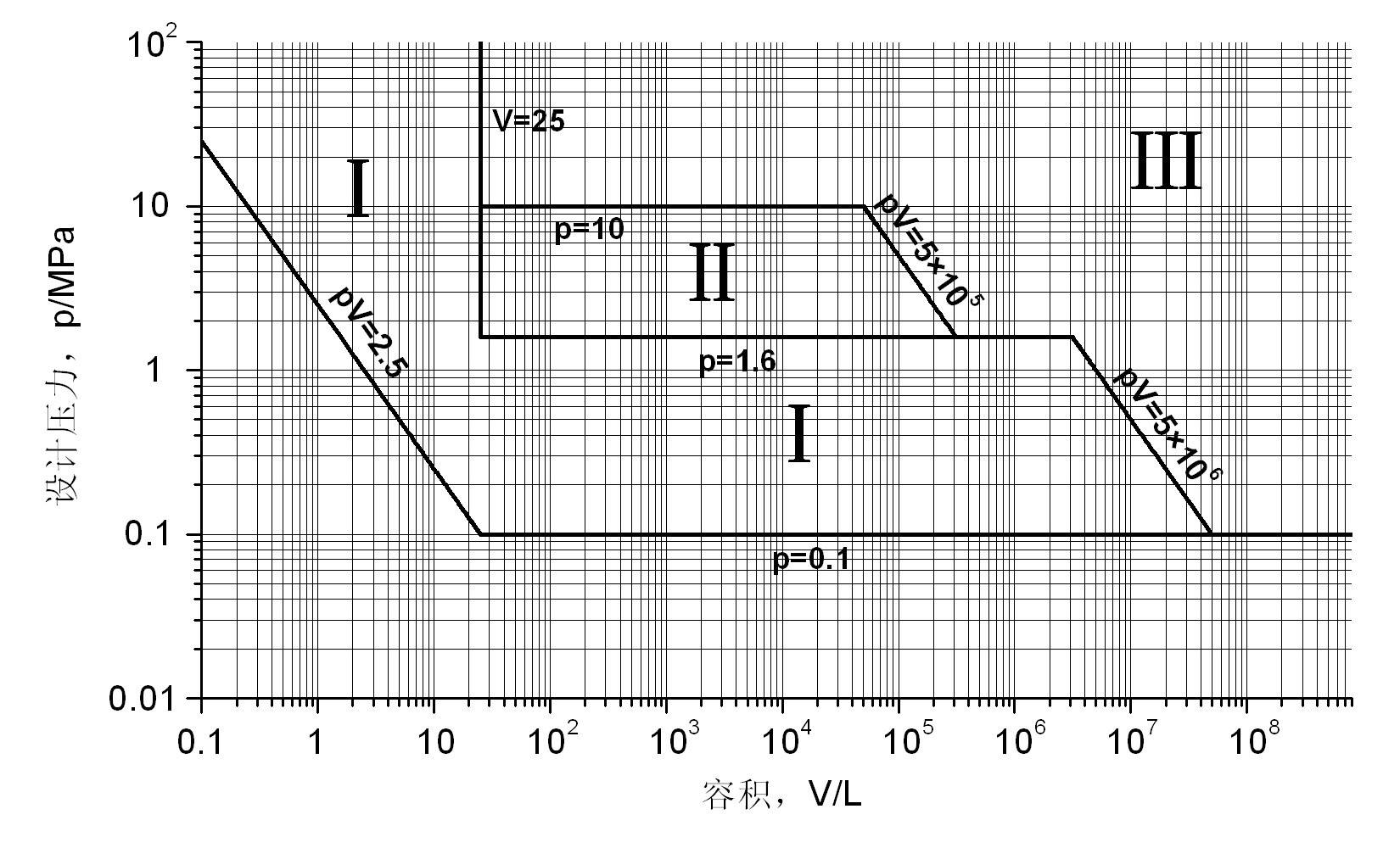
None of these methods alone reflects how dangerous a vessel really is. The risk depends on the product of design pressure and volume (PV): the larger that product, the greater the energy released in the event of failure and the higher the risk — and the stricter the requirements for design, manufacture, inspection, operation and management.
4. By safety technology management. The supervisory classification used in China considers pressure, volume, the hazard of the medium and the role of the vessel in the process, and divides vessels into three categories accordingly.