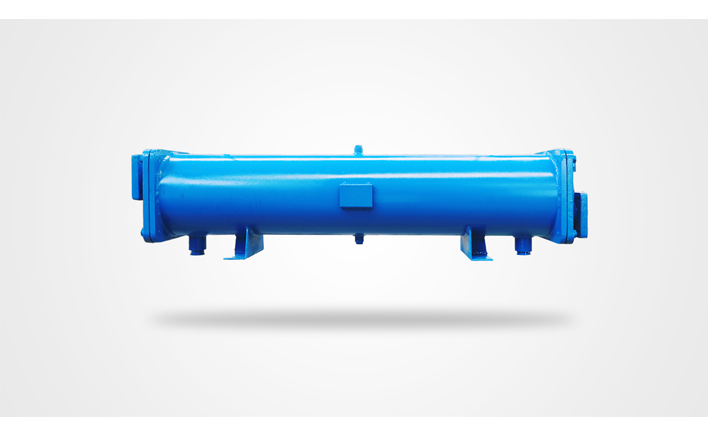
Precautions for using oil coolers
An oil cooler is the oil cooling device widely used in hydraulic and lubrication systems. It transfers heat between two fluids at different temperatures, lowering oil temperature so that the system can run normally.
Types
Water-cooled coolers use water as the cooling medium. They cool effectively and can reach low oil temperatures, but they can only be used where a water supply is available.
Air-cooled coolers use air as the cooling medium. They are not restricted by location and are environmentally friendly, but ambient temperature limits performance: in hot weather the oil cannot be cooled to the ideal level, and an air cooler can rarely bring oil temperature down to only slightly above ambient. Modern designs have largely overcome this limitation.
Installation and start-up
The cooler should be installed in the return line of the system or in a circuit below design pressure, with the oil-side pressure higher than the water-side pressure. After installation, check that all connections to pipework, fittings and instruments are correct and tight.
To start up, close the oil outlet and water outlet valves, loosen the vent plug, then slowly open the oil inlet and water inlet valves so that the cooler fills with oil and water. Tighten the vent plug and let both fluids stand until the temperature difference between oil and water has equalised. Then open the outlet valves and adjust the water flow to the required heat balance.
If the cooler has been out of service for a long time, pressure test it before use — test the hot and cold sides separately at 1.5 times the working pressure, hold for 30 minutes, and put the unit into service only if no seal leaks. Check that the clamping bolts are tight and that the clamping dimension matches the manual; if not, tighten the bolts evenly to the specified dimension.